Every morning, I wake up to headlines that feel less like news and more like a challenge to my faith in human decency. This administration has made it clear that cruelty is not a side effect, it’s the point.
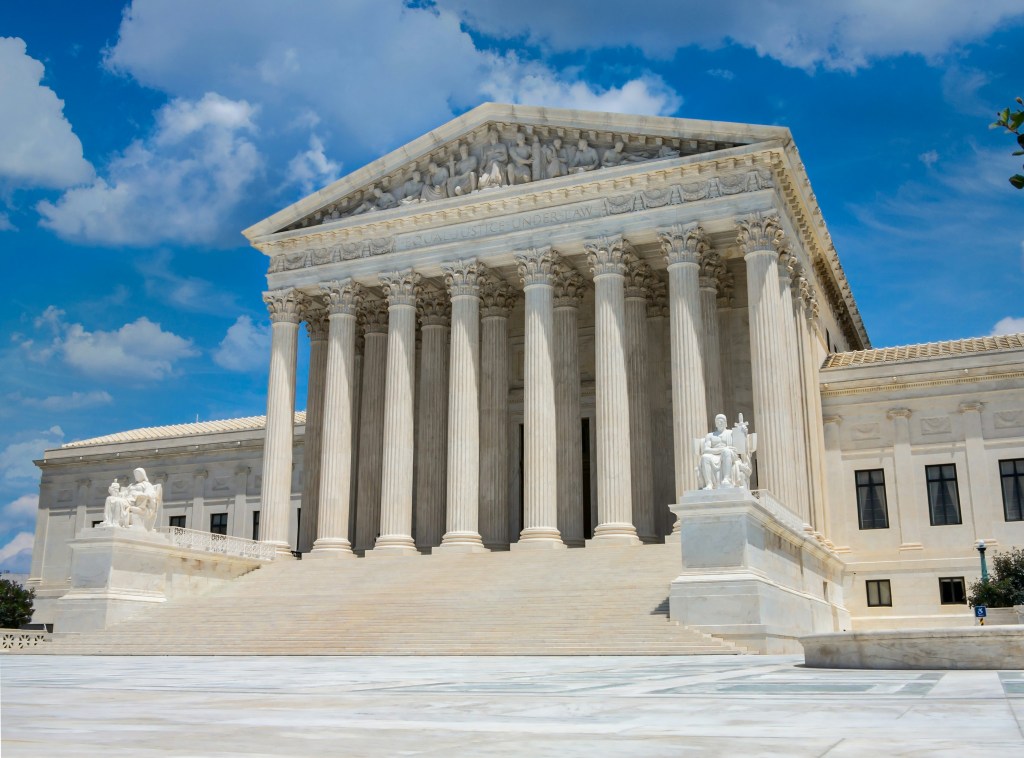
Below, I’ve compiled a list of key U.S. Supreme Court decisions from 2016 to now, 2025, that have directly eroded or restricted freedoms and protections we previously had. It’s important to know that this isn’t a complete list of every decision; these are just a focused look on how this adminstration has weakened personal liberties over the last decade.
2016 – 2025 Key U.S. Supreme Court Decisions
Civil Rights and Discrimination
Trump v. Hawaii (2018)
Upheld the Muslim travel ban.
SCOTUS Blog Summary
303 Creative LLC v. Elenis (2023)
Allowed businesses to refuse service for same-sex weddings.
SCOTUS Blog Summary
Students for Fair Admissions v. Harvard/UNC (2023)
Ended race-conscious affirmative action in college admissions.
SCOTUS Blog Summary
Janus v. AFSCME (2018)
Weakened public employee unions and collective bargaining.
Oyez Summary
Environmental Protections
West Virginia v. EPA (2022)
Limited the EPA’s ability to regulate greenhouse gases.
SCOTUS Blog Summary
Loper Bright Enterprises v. Raimondo (2024)
Overturned Chevron deference, undermining agencies’ power to protect health and environment.
SCOTUS Blog Summary
Gun Regulations
New York State Rifle & Pistol Association v. Bruen (2022)
Struck down limits on concealed carry.
SCOTUS Blog Summary
Reproductive Rights
Dobbs v. Jackson Women’s Health Organization (2022)
Overturned Roe v. Wade.
SCOTUS Blog Summary
FDA v. Alliance for Hippocratic Medicine (Mifepristone case) (2024)
Ongoing challenges to medication abortion access—while the Court didn’t fully restrict it yet, they signaled openness to more limits.
SCOTUS Blog Summary
June Medical Services v. Russo (2020)
Although the Court blocked Louisiana’s restriction, it showed how fragile Roe was even before Dobbs.
Oyez Summary
Separation of Church and State
Kennedy v. Bremerton School District (2022)
Allowed public school prayer by employees.
SCOTUS Blog Summary
Carson v. Makin (2022)
Forced states to fund religious education under school choice programs.
SCOTUS Blog Summary
Voting Rights
Brnovich v. Democratic National Committee (2021)
Gutted parts of the Voting Rights Act and weakened protections against discriminatory voting laws.
SCOTUS Blog Summary
Rucho v. Common Cause (2019)
Barred courts from reviewing extreme partisan gerrymandering.
SCOTUS Blog Summary
Moore v. Harper (2023)
While the Court didn’t fully embrace the “independent state legislature” theory, it left significant questions about unchecked state power over elections.
SCOTUS Blog Summary
You might look at this timeline and say, “But some of these happened under Biden.”
That’s true. But it’s also important to remember that a third of the Justices who delivered these decisions were appointed by Trump, confirming exactly what his supporters hoped for: a Court willing to dismantle decades of civil rights, environmental protections, and personal freedoms.
For many years, I was taught that the Republican party was the champion of the Constitution. That it stood for individual liberty and minimal government interference in people’s lives. More often than not, what I hear from Republican peers and my community is, “I don’t want the government in my business.”
When I’m looking at how many fundamental rights that have been whittled away: bodily autonomy, the right to vote without obstruction, the ability to live free from religious imposition; I’m left wondering if that story was ever true. Because if it were true, why is my community so quick to support those who are stripping our rights away every day? What I see now doesn’t look like limited government. It looks like a government determined to control the most personal parts of our lives.
Look, I know it can be hard to watch someone doing something you personally don’t support and still say, “Well, that’s their right.” But there is a huge difference between privately passing judgment and passing legislation against your neighbor because you don’t like how they worship, how they came here, who they love, or how they became a family. The list goes on and on.
Often in these scenarios, a minority is being targeted. You may think, “Well, it doesn’t affect me.” Maybe not today, but you never know what tomorrow holds. One day, you may learn that your child is part of this marginalized community. You may learn it’s your sibling, or your favorite aunt. You may even one day realize that you yourself belong to one of these communities, and you never knew it.
The point is even if you don’t want to exercise a particular right, it matters that you have the freedom to make that choice. Those freedoms belonged to all of us, and now they belong to none of us.
 Little Blue Texans
Leave a comment